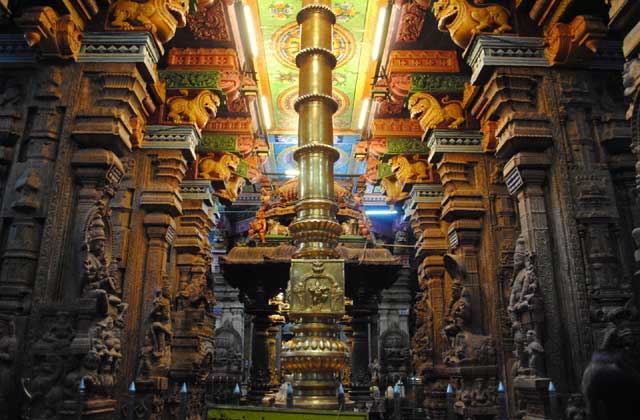
Meenakshi Temple

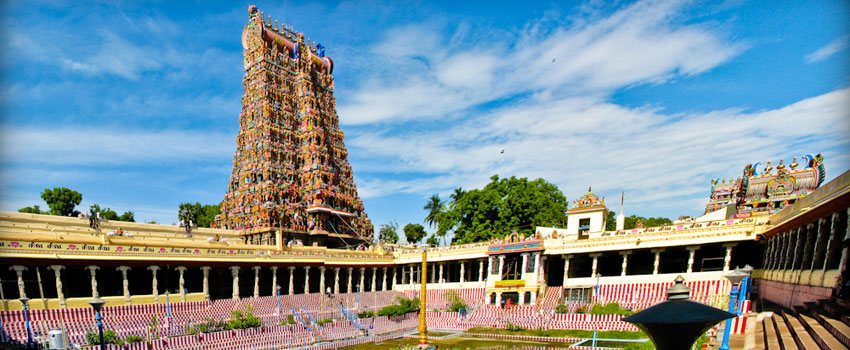
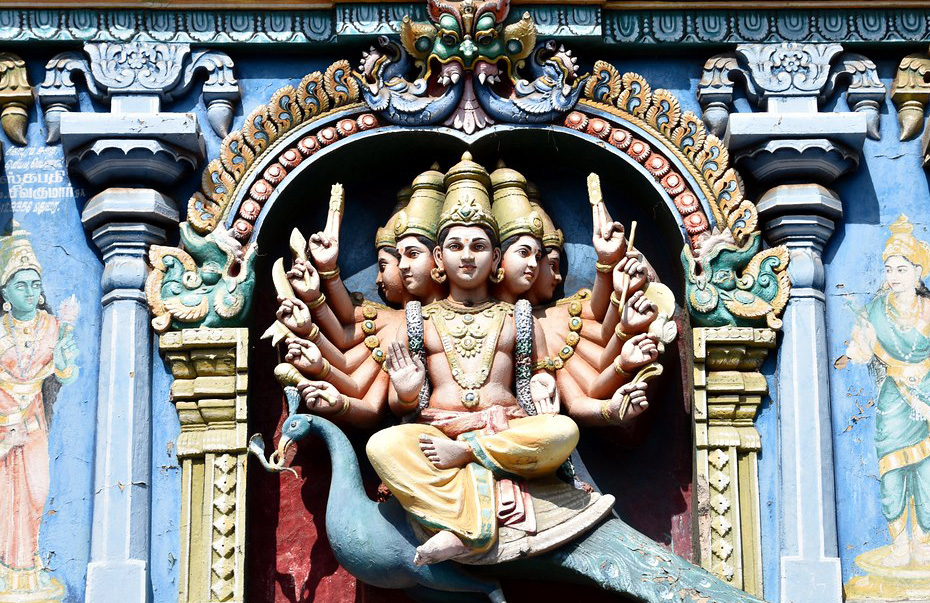
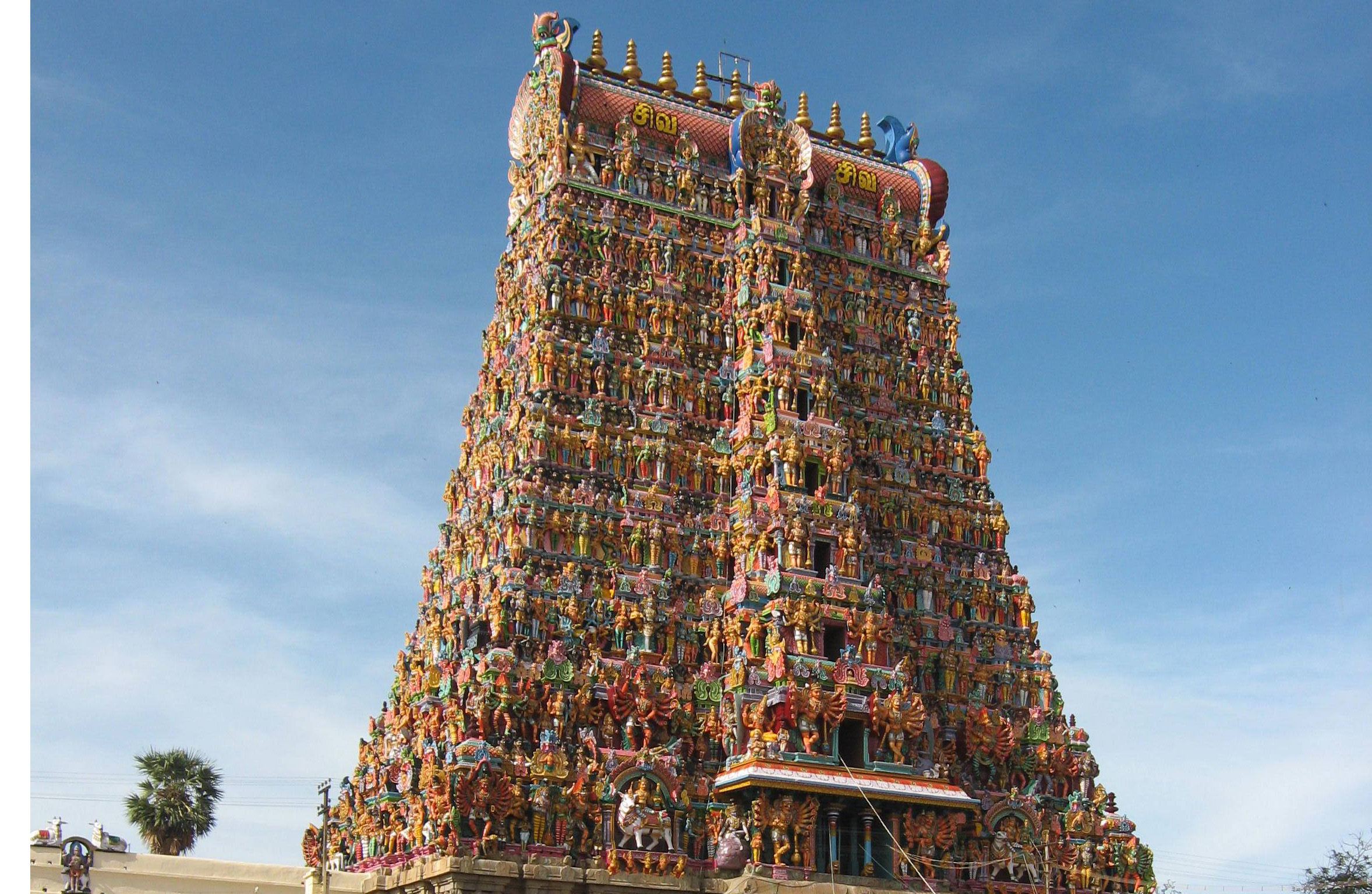
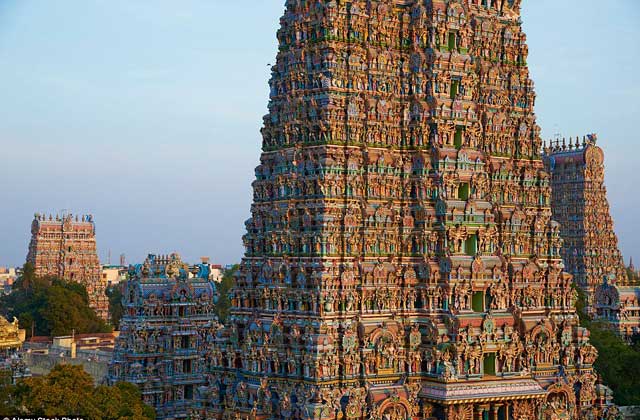
The Meenakshi Sundareswarar Temple or Meenakshi Amman Temple is one of the most famous Hindu temples dedicated to Lord Shiva and goddess Parvati located in the holy city of Madurai, Tamil Nadu, India. It is commonly referred to as the Meenakshi temple. The temple forms the heart and lifeline for the 2500 year old city of Madurai that is believed to be the home for the classical language of Tamil. According to the Hindu legends, Lord Shiva with his divine group of followers appeared here in this city of Madurai, to marry the daughter of the Pandya ruler, Meenakshi, who is believed to be a form of Hindu goddess Parvati. This temple is one of the most sacred abodes of Parvathi, others being Kamakshi of Kanchipuram, Akilandeswari of Thiruvanaikaval and Vishalakshi of Varanasi.

History

According to Hindu legend, the Lord Shiva came down to earth in the form of Sundareswarar to marry the goddess Meenakshi, who is a form of Parvati, Shiva's divine consort. Parvathi had earlier descended to earth in the form of a small kid in response to the great penance of Malayadwaja Pandya, the ruler of Madurai. After growing up she starts ruling the city and the Lord appears on earth and proposes to marry her. According to Hindu mythology, the marriage was supposed to be the biggest event on earth, with the whole earth gathering near Madurai.
Lord Vishnu the divine brother of Meenakshi was traveling to preside over the marriage from his holy abode at Vaikuntam. Due to a divine play, He was tricked by god Indra and delayed on the way and in the meanwhile marriage is presided over by a local god Koodal Azhaghar. This angers Lord Vishnu very much and he swears never to enter the city and settles in the outskirts at the beautiful hill of Alagar Koil. He was later convinced by other gods and he proceeded to bless the divine couple - Shiva and Parvati.

The temple structure

The Shiva shrine lies at the centre of the complex, suggesting that the ritual dominance of the goddess developed later. The Shiva shrine also consists of an unusual sculpture of the Hindu god Nataraja. This famous Hindu marquee and a dancing form of Shiva that normally has his left foot raised, has his right foot raised in this temple. According to the legend, this is on the request of the Rajasekara Pandya king who asked the Lord to change his position, as he felt that always keeping a single foot raised will pose enormous stress on that, based on his personal experiments in dancing.
This massive Nataraja sculpture is enclosed in a huge silver altar and hence called Velli Ambalam (Silver abode). Outside the Shrine, lies huge scultptures carved of single stone and there is a shrine for a giant Ganesh temple, called the Mukuruny Vinayakar. This idol is believed to have been found during an excavation process to dig the temple lake. The Meenkashi shrine is on the left of the Shiva shrine and is of scultpturally less valuable than the Shiva shrine.

Potramarai Kulam, the sacred pond measuring 165 ft * 120 ft , inside the temple is a very holy site for the devotees and people go around the lake before entering the main shrine. The etymology for the word means, the Pond with the Golden Lily and as the Lily that grows in it has a golden color. According to the legend, Lord Shiva promised to a stork that no fish or other marine life would grow here and thus no marine animals are found in the lake. In the Tamil legends, the lake is supposed to be a judge for judging a worth of a new literature. Thus, authors place their works here and the poorly written works are supposed to sunk and the scholastic ones are supposed to float.

The Aiyaram Kaal Mandapam or thousand pillar hall is of very high sculptural importance that contains 985 (instead of 1000) magnificently carved pillars and maintained by the Archaelogical Survey of India. The thousand pillar hall is supposed to have been built by Arya Natha Mudaliyar , the Prime Minister of the first Nayaka of Madurai (1559-1600 A.D.), the founder of 'Poligar System'. An equestrian statue of the Mudaliyar flanks one side of the steps leading to the 'mandapam'. Each pillar is sculptured and is a monument of the Dravidan sculpture. There is a Temple Art Museum in this 1000 pillars hall where you can see icons, photographs, drawings, etc., exhibiting the 1200 years old history. Just outside this mandapam ,towards the west, are the Musical Pillars. Each pillar when stuck, produces a different musical note. The kalyana mandapa, to the south of the pillared hall, is where the marriage of Shiva and Parvati is celebrated every year during the Chitirai Festival in mid- April.

Creator : Pandya Kings
Date built : Recent construction around 17th century AD
Primary deity : Sundareshwara(Shiva) and Meenakshi(Parvati)
Architecture : South Indian, Kovil
Location : Madurai

Following are the famous Monuments in India:


Please visit our popular pages :

Indian Languages | Indian Tourism | Indian Monuments | Indian Temples
 
Interesting Information
- Visitor Insurance
- Practical Immigration Info
- Student Medical Insurance


Indian Insurance
- Health Insurance India
- Travel Insurance India
- Student Insurance India
 
Indian Festivals
 
NRI Shop
- Visitor Insurance
- Indian Tour Packages
 
Interactive NRIOL
- NRI Survey
- Letters to Editor
 
Calories Counter
 
Health Tools
- Basal Metabolic Rate
- Body mass index
- Body Fat estimator
- Waist Hip Ratio calculator
- Healthcare tips
 
 
NRIOL Community


Home | News & Views | NRIOL Exclusives | Community | Resources | India Travel Insurance | Visitor Medical Insurance | Shop | Help | Feedback | Blogs
Estd. 1997 © Copyright NRI Online Pvt. Ltd. All rights reserved worldwide. Please read our site policy.