
Indian Languages


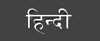
Hindi Language


Assamese Language


Bengali Language


Gujarati Language


Kannada Language


Malayalam Language 


Marathi Language


Punjabi Language


Tamil Language


Telugu Language


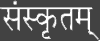
Sanskrit Language


History of Indian Languages

Based on the estimation of 1995 population, about 80 percent of all Indians can speak one of the Indo-Aryan group of languages. Like the Indo-Aryan languages the languages of Afghanistan are close relatives belonging to the Indo-Iranian branch of the Indo-European family. The earlier languages of the areas in North are displaced gradually during the second millennium B.C after bringing from the northwest to India, the Indo – Aryan tongues spread accordingly.

The process of incorporation of the modern linguistic knowledge comes through the Sanskrit language employed the Vedas, known as a sacred literature. In the northern and central portions of South Asia, the Indo-Aryan came to predominance over a period of centuries. A constant change and development is seen in the languages as the Indo-Aryan speakers spread across northern and central India. Common forms of speech or ‘Prakrits’ were widespread thought the north by about 500 B.C. The "sacred," "polished," or "pure" tongue--Sanskrit--used in religious rites had also developed along independent lines about the same time by changing drastically from the form used in the Vedas. The preservation of archaic forms lost in the Prakrits in ritual settings is encouraged. A detailed science of grammar and phonetics and an alphabetical system seen by some scholars as superior to the Roman system was evoked when the concerns for the purity and correctness of Sanskrit was stressed. Panini’s works in the fourth century B.C culminated the Sanskrit grammar, the Ashtadhyayi (Eight Chapters), set the basic form of Sanskrit for subsequent generations. Panini's work is often compared to Euclid's as an intellectual feat of systematization.

However, the Prakrits continued to develop through everyday usage. One of these dialects was Pali, which was spoken in the western segment of peninsular India. Pali became the language of Theravada Buddhism; ultimately it came to be recognized exclusively with religious contexts. By around A.D. 500, the Prakrits had changed further into Apabhramshas, or the "decayed" speech; it is from these dialects that the contemporary Indo-Aryan languages of South Asia developed. The rudiments of modern Indo-Aryan vernaculars were in place by about A.D. 1000 to 1300.

It would be rather misleading to consider Sanskrit a dead language because for ages there were huge numbers of works in all genres and subjects written in Sanskrit. Original works are still written in it, although in much smaller numbers than formerly. Even today many students take up Sanskrit as a second or third language to learn. Classic music concerts continuously feature the Vocal Compositions in Sanskrit language, and there is even television programs conducted entirely in Sanskrit.

The Dravidian languages is spoken by around 18 percent of the Indian populace (about 169 million people in 1995). When compared to the north, the Dravidian speakers reside in South India where Indo-Aryan influence was less extensive. Only a few secluded groups of Dravidian speakers such as the Gonds in Madhya Pradesh and Orissa, and the Kurukhs in Madhya Pradesh and Bihar, remain in the north as representatives of the Dravidian speakers who presumably once dominated much more of South Asia.

The oldest documented Dravidian Indian language is Tamil, with a considerable body of literature, particularly the Cankam poetry, going back to the first century A.D.Kannada and Telugu developed widespread bodies of literature after the sixth century, while Malayalam split from Tamil as a literary language by the twelfth century. In spite of the deep influence of the Sanskrit language and Sanskritic culture on the Dravidian languages, a strong awareness of the distinctness of Dravidian languages from Sanskrit remained. All four major Dravidian languages had deliberately differentiated styles varying in the amount of Sanskrit they contained. In the twentieth century, as part of an anti-Brahman movement in Tamil Nadu, a strong movement arose to "purify" Tamil of its Sanskrit elements, with mixed success. The other three Dravidian languages were not much affected by this trend.

In addition to all theses there are also smaller groups who are mostly tribes and speak speak Sino-Tibetan and Austroasiatic languages. Sino-Tibetan speakers live along the Himalayan border from Jammu and Kashmir to eastern Assam. They consist about 1.3 percent, or 12 million, of India's 1995 population. The Austroasiatic languages, composed of the Munda tongues and others thought to be related to them, are spoken by groups of tribal peoples from West Bengal through Bihar and Orissa and into Madhya Pradesh. These groups make up approximately 0.7 percent (about 6.5 million people) of the population. They consist about 1.3 percent, or 12 million, of India's 1995 population. The Austroasiatic languages, composed of the Munda tongues and others thought to be related to them, are spoken by groups of tribal peoples from West Bengal through Bihar and Orissa and into Madhya Pradesh. These groups make up approximately 0.7 percent (about 6.5 million people) of the population.

Many scholars treat South Asia as a single linguistic area despite of the rich linguistic diversity in India because the various language families share a number of features not found together outside South Asia. In the verb formation the scholars have found that the presence of retroflex consonants characteristics structures, and a significant amount of vocabulary in Sanskrit with Dravidian or Austroasiatic origin as indications of mutual borrowing, influences, and counterinfluences. Retroflex consonants, for example, which are formed with the tongue curled back to the hard palate, appear to have been incorporated into Sanskrit and other Indo-Aryan languages through the medium of borrowed Dravidian words.


Please visit our popular pages :


Indian Tourism | Indian Monuments | Indian Temples


Interesting Information
- Visitor Insurance
- Practical Immigration Info
- Student Medical Insurance


Indian Insurance
- Health Insurance India
- Travel Insurance India
- Student Insurance India
 
Indian Festivals
 
NRI Shop
- Visitor Insurance
- Indian Tour Packages
 
Interactive NRIOL
- NRI Survey
- Letters to Editor
 
Calories Counter
 
Health Tools
- Basal Metabolic Rate
- Body mass index
- Body Fat estimator
- Waist Hip Ratio calculator
- Healthcare tips
 
 
NRIOL Community


Home | News & Views | NRIOL Exclusives | Community | Resources | India Travel Insurance | Visitor Medical Insurance | Shop | Help | Feedback
Estd. 1997 © Copyright NRI Online Pvt. Ltd. All rights reserved worldwide. Please read our site policy.