West India Tourism
Welcome to Western part of India
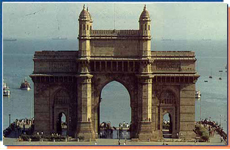
West India includes the states like Goa and Gujarat in addition to Maharashtra. Western Part is popular because of Bombay, Goa (For its beaches), Rann of Katch (Gujarat), Temples of Ajanta & Ellora (Aurangabad, Maharashtra) & Wildlife Sanctuaries in Gujarat. After the vibrant atmosphere of Bombay, allow the palm-fringed beaches of Goa to warm your spirit in the sun and relax your mind. Or meditate in cool and ancient Buddhist caves tunneled out of solid rock on the craggy hillsides - a dramatic contrast from the colourful fairs and festivals in unspoiled Gujarat. The choice is once again tremendous in this land that offers everything Bombay - Gateway of India.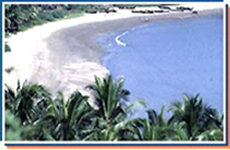
GOA
Goa which was liberated on 19th December, 1961 alongwhh Daman and Diu from 451 years Portuguese Colonial Rule, became the 25th State of the Indian Union when it was conferred Statehood on 30th May, 1987. The State of Goa has a Legislative Assembly with a strength of 40 elected members. Besides, Goa has three elected representatives in the Central Parliament. The Governor is the Head of the State and is advised by a Council of Ministers headed by Chief Minister. Panaji, a small picturesque town on the left bank of river Mandovi, is the seat of the State Administration. However, for administrative purposes, the State has been divided into two districts: North Goa and South Goa with headquarters at Panaji and Margao respectively, and six divisions comprising 11 Talukas.
Goa which was liberated on 19th December, 1961 alongwhh Daman and Diu from 451 years Portuguese Colonial Rule, became the 25th State of the Indian Union when it was conferred Statehood on 30th May, 1987. The State of Goa has a Legislative Assembly with a strength of 40 elected members. Besides, Goa has three elected representatives in the Central Parliament. The Governor is the Head of the State and is advised by a Council of Ministers headed by Chief Minister. Panaji, a small picturesque town on the left bank of river Mandovi, is the seat of the State Administration. However, for administrative purposes, the State has been divided into two districts: North Goa and South Goa with headquarters at Panaji and Margao respectively, and six divisions comprising 11 Talukas.
Maharashtra
Maharashtra is one of the largest states in India, both in terms of population and area. Its booming capital Mumbai, makes it not only one of the most important states economically, but also a major gateway for overseas visitors. The first well known rulers of Maharashtra were the Satavahanas (230 BC to 225 AD), who were the creators of Maharashtra, and have left a plethora of literary, epigraphic, artistic and archaeological evidence. The Maharashtrians' love for art and culture is quite evident in their intense interest in drama. Maharashtra, a state where a millennium of culture weaves a tapestry of myriad charms. The spiritual solace of centuries. The sylvan serenity of the countryside. The stillness of a thicket disturbed only by a tiger flashing past, or the symphony of tradition from its varied population. All abound in a unique togetherness. In Maharashtra, a state as vivid as vivacious.
Maharashtra is one of the largest states in India, both in terms of population and area. Its booming capital Mumbai, makes it not only one of the most important states economically, but also a major gateway for overseas visitors. The first well known rulers of Maharashtra were the Satavahanas (230 BC to 225 AD), who were the creators of Maharashtra, and have left a plethora of literary, epigraphic, artistic and archaeological evidence. The Maharashtrians' love for art and culture is quite evident in their intense interest in drama. Maharashtra, a state where a millennium of culture weaves a tapestry of myriad charms. The spiritual solace of centuries. The sylvan serenity of the countryside. The stillness of a thicket disturbed only by a tiger flashing past, or the symphony of tradition from its varied population. All abound in a unique togetherness. In Maharashtra, a state as vivid as vivacious.
Gujarat
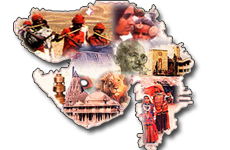
North west India has a state known as Gujarat, which covers an area of about 196,204 km. Gujarat is surrounded by Rajasthan to the north, Maharashtra to the south, Madhya Pradesh to the east, and the Arabian Sea as well as the Pakistani province of Sindh on the west. Gandhinagar is the capital city of Gujarat.
North west India has a state known as Gujarat, which covers an area of about 196,204 km. Gujarat is surrounded by Rajasthan to the north, Maharashtra to the south, Madhya Pradesh to the east, and the Arabian Sea as well as the Pakistani province of Sindh on the west. Gandhinagar is the capital city of Gujarat.

Domestic Travel Insurance
Popular Domestic travel health insurance coverage offered by Indian insurance companies. Click Here
Popular Domestic travel health insurance coverage offered by Indian insurance companies. Click Here
