|
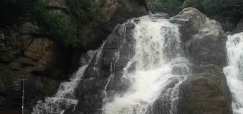
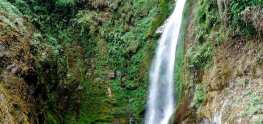
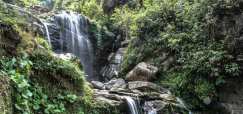
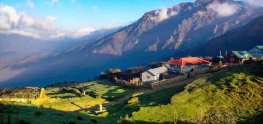
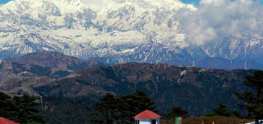
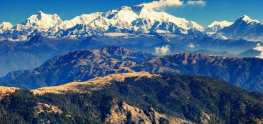
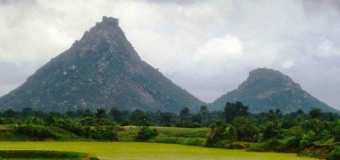
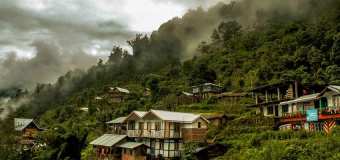
The Himalayan north, comprising the districts of Darjeeling, Jalpaiguri and Cooch Bihar are watered by the swift flowing rivers Tista, Torsa, Jaldhaka and Ranjit. Variations in altitude result in great variety in the nature and climate of West Bengal. From the northern highlands at the feet of the Himalayas to the tropical forests of Sunderbans, West Bengal is a land of myriad beauty, each region different from the other.
Although in area West Bengal ranks as one of the smaller states of India, it is one of the largest in population. The capital is Calcutta, India's second largest city; other important cities and towns are Howrah, Asansol, Durgapur and Siliguri, Darjeeling, Kharagpur and Haldia.
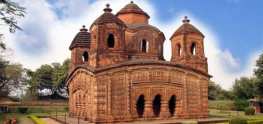
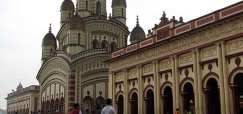
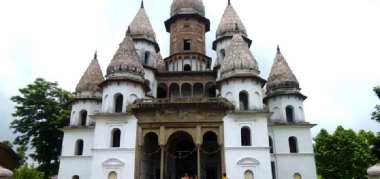
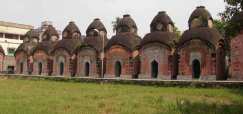
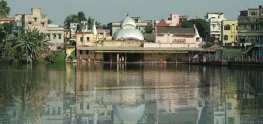
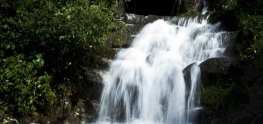
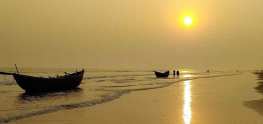
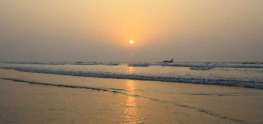
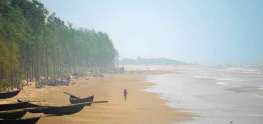
West Bengal offers a diverse tourism interests which includes Religious, Cultural and Heritage Sights, Natural Splendours and Himalayas to the North and Bay of Bengal to the South, Forests and sights and sounds of bustling modern cities. There are several pristine beaches in the Bay of Bengal. In between these natural beauties are various towns and cities, including the capital city of Kolkata, which offer countless dimensions of religion, culture, heritage, attractions and society at large.
The state is known as one of the most industrialized states in India. Tea, Steel, Jute, Sugar, Chemical, Fertilizers, Medicines and Pharmaceuticals are some of the important industries in the state.
The culture of Bengal is indentified with its contribution to the literature, music and cinema. The culture of West Bengal is considered to be one of the richest cultures in India. Over the years, the culture of West Bengal has emerged as the perfect blend of modernity and tradition.
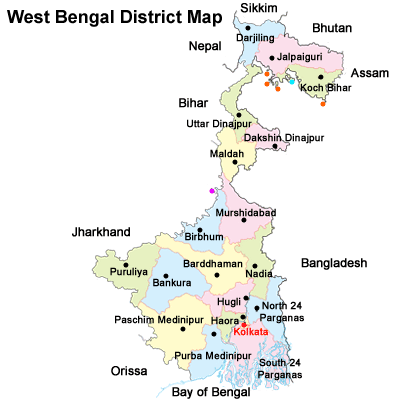
West Bengal has a single-chamber legislative assembly with 295 seats. The state sends 58 members to the Indian national parliament: 16 to the Rajya Sabha (Upper House) and 42 to the Lok Sabha (Lower House). Local government is based on 18 administrative districts.
History
Bengal finds a coveted place even in pre-historic times. At the time of Alexander’s invasion a powerful kingdom called Gangaridai ruled over Bengal. Ascendancy of the Guptas and the Mauryas had somewhat little effect on Bengal. Later Sasanka became the king of Bengal and is said to have played an important role in the early half of the seventh century. He was succeeded by Gopala who founded the Pala dynasty which ruled for centuries and had created a huge empire. The Palas were followed by the Sena dynasty which was ended by Muslim rulers from Delhi. Bengal was ruled by various Muslim rulers and governors till the Mughal period in sixteenth century.
After the Mughals, history of Modern Bengal began with advent of European and English traders. Battle of Plassey in 1757 changed the course of history when the English first gained a strong foothold in Bengal and India. In 1905 it was partitioned to achieve some political returns but people’s growing movement under the auspices of the Congress led to the reunion in 1911. This triggered off hectic movement for freedom which culminated with Independence in 1947, and partition.
After 1947, the merger of native settlement began which ended with its final reorganization in 1956 (as per Recommendation of the States Reorganisation Act, 1956) when some Bengali speaking areas of a neighbouring state was transferred to West Bengal. |