NRIOL  -  Non-Resident Indians Online! Visitor Medical Insurance
Home Indian Tourism-Details Regions of India Miscellaneous Types of Tours About Us
Indian Tourism             

Temples in Eastern India          

Jagannath Temple
Kalighat Temple
Budhadeva Temple
Parsuramakund
Kamakhya Temple
Deoghar Temple
Sikkim Temple
Chaturdasha Temple
Manipur Temple
Meghalaya Temple
Mizoram an Introduction
Nagaland an Introduction

Parks in Eastern India              

Nandankanan National Park
Sundarban Park
valmiki Park
Gumti Park
Kaziranga Park
Palamu Park
Kanchendzonga Park
Kamlang Park

Wildlife Sanctuary in East              

Assam Wildlife Sanctuary
Tripura Wildlife Sanctuary
Westbengal Wildlife Sanctuary

Orissa Wildlife Sanctuary
Wildlife Sanctuary Mizoram
Wildlife Sanctuary Nagaland
Culture in East
Culture of Orissa
Culture of West Bengal
Culture of Bihar
Culture of Arunachal
Culture of Assam
Culture of Jharkhand
Culture of Sikkim
Culture of Tripura
Culture of Manipur
Culture of Meghalaya
Culture of Mizoram
Culture of Nagaland

Tripura


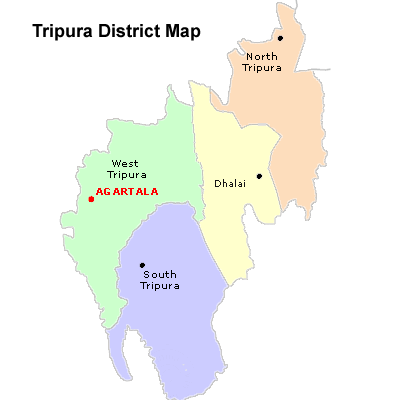
Introduction to Tripura

Tripura is one of the most ancient princely states of India. It is a tiny state belonging to the group of seven sister states (Tripura, Mizoram, Meghalaya, Nagaland, Manipur, Assam and Arunachal Pradesh) near Assam surrounded by Bangladesh. Tripura is not known to the people of the world; even many Indians have very little knowledge about the State.

Tripura is a beautiful hilly place with altitudes varying from 50 to 3,080 sq. ft. above sea level, though the major population of the state lives in the plains. Previously a princely state, and subsequently a Union Territory of Independent India, Tripura was elevated to the status of a state on January 21, 1972. Tripura is largely dominated by Bengali Community, in spite of the 19 Schedule Tribes, that form a major chunk of the population.

Buddhist Rulers & Archeological Buddhist Sites:

Though it is not clear who was the first Buddhist king who ruled Tripura, it is evident from Archeological findings of Pilak and Boxnagar (Buddhist sites) that the earliest rulers of Tripura were Buddhists dated back to the 2nd and 3rd centuries A.D. According to "Rajmala" the historical record of the royal lineage of Tripura, the Mog (Burmese origin) were the powerful Buddhist kings of Tripura. Buddhism flourished in Tripura from 2nd to 9th century A.D. Both Theravada and Mahayana forms of Buddhism were practiced, though Theravada Buddhism seemed to have had stronghold in many parts of Tripura for many centuries.

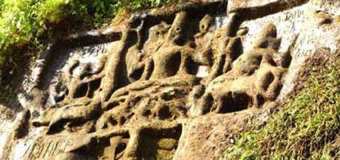
A few months back, the Government of Tripura has excavated a cetiya (pagoda) resembling the Amravati Stupa which is now safe-guarded by the authority of Archeological Survey of India. This excavated pagoda is understood to belong to 2nd or 3rd century A.D. Many Buddha statues have also been excavated at the site. Pilak is another archeological Buddhist site situated in South Tripura District. Statues of Buddha, Avalokiteòvara and Târâ were found at Pilak site dated back to the 7th and 8th centuries A.D. Archeologists and research scholars opined that Mahayana and Theravada Buddhist traditions might have been dominant in this region extending to Pattikera and Mainamati in Bangladesh.

Our Other Information about Tripura state are as follows :

Visitors insurance
 
Travel Booking To India

Indian Insurance

Travel Insurance

Student Insurance

Parents Insurance
 
 
Weather in India

Non Resident Indian Community

Visitor Medical Insurance |  Indian Insurance |  About Us |  Contact Us |  Sitemap |  Disclaimer |


Copyright NRI Online Pvt Ltd All rights reserved worldwide