NRIOL  -  Non-Resident Indians Online! Visitor Medical Insurance
Home Indian Tourism-Details Regions of India Miscellaneous Types of Tours About Us
Indian Tourism             

Temples in North          

Golden Temple
Khajuraho Temples
Lotus Temple

Parks in North              

Bharatpur National
Park

Corbett National
Park

Kaziranga National
Park

Sultanpur National
Park


Wildlife Sanctuary in North              

Ranthambore Wildlife
Sanctuary

Corbett Wildlife
Sanctuary

Sariska Wildlife
Sanctuary


Culture in North
Culture of Rajastan
Culture of Punjab
Culture of Uttaranchal
Culture of Uttarpradesh
Culture of Himachal pradesh
Culture of Jammu-Kashmir
Culture of Haryana

Culture of Rajastan

Rajastan

Rajasthan includes most of the erstwhile region called Rajputana (land of the Rajputs) which was comprised of Rajput kingdoms. "Rajput" literally means 'son of a king'. Rajput families rose to prominence in the 6th century CE, establishing kingdoms in Rajputana and across northern India. The Rajputs resisted the Muslim incursions into India, although a number of Rajput kingdoms eventually became subservient to the Delhi Sultanate and the Mughal Empire during those empires' peak of expansion. Mewar leads others in resistance toward muslim rule, Rana Sanga was to organise Battle of Khanua against Babur and Maharana Pratap against Akbar in Haldighati. While other rulers like Raja Maan Singh of Amer ware trusted allies. As Mughal empire weakened, the Rajputs reasserted their independence. With the decline of the Mughal Empire in the 18th century, Rajputana came under attack from the Marathas and Pindaris, and the Maratha general Scindhia captured Ajmer. The Rajput kings concluded treaties with the British in the early 19th century, accepting British sovereignty in return for local autonomy and protection from the Marathas.Following the Mughal tradition and more importantly due to its strategic location Ajmer became a province of British India, while the autonomous Rajput states and a few non-Rajput states (Tonk, Bharatpur, and Dholpur) were organized into the Rajputana Agency

Rajasthan's former independent kingdoms created a rich architectural and cultural heritage, seen today in their numerous forts and palaces (Mahals and Havelis), which are enriched by features of Muslim and Jain architecture.


jaisalmer
Jaisalmer

rajastani
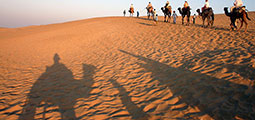
The Thar Desert of Rajasthan comes alive when its dancers take the center stage. Rajasthan has great variety of dances, which are simple expressions of celebration and festivity. The dancers, the dances and costumes have made Thar the most colorful desert in the world. Each region adding its own form of dance styles and performers. There are dances that follows a lineage of age old traditions, adhere to religious significance, display their daring attitude as well as complimenting various fairs and festivals.
Ghoomar, a community dance for women performed on auspicious occasions. Gair Ghoomar, Raika, Jhoria and Gauri are particularly of Bhil tribe. Gair is performed on Holi but only by the men folk. Chari dance, with pots on the head and a lighted lamp, is popularly performed on marriage occasions or on the birth of a male child. Kalbelia dance is of the kalbelia tribe, the snake charmers. With numerous pots on the head, women excel the balancing act in the Matka-bhawai. Terah taali, is a ritual for Baba Ramdev, a dance with thirteen manjiras. Other dances are Kachhi-Ghodi, Kathputli (the puppet dance), Fire dance, drum dance and various others pertaining to the particular tribes. Kathhak, a popular dance form being imported from Uttar Pradesh have been revived by the rajputana courts, with a style and theme of its own.

Visitors insurance
 
Travel Booking To India

Indian Insurance

Travel Insurance

Student Insurance

Parents Insurance
 
 
Weather in India

Non Resident Indian Community

Visitor Medical Insurance |  Indian Insurance |  About Us |  Contact Us |  Sitemap |  Disclaimer |


Copyright NRI Online Pvt Ltd All rights reserved worldwide