NRIOL  -  Non-Resident Indians Online! Visitor Medical Insurance
Home Indian Tourism-Details Regions of India Miscellaneous Types of Tours About Us
Indian Tourism             

Temples in Eastern India          

Jagannath Temple
Kalighat Temple
Budhadeva Temple
Parsuramakund
Kamakhya Temple
Deoghar Temple
Sikkim Temple
Chaturdasha Temple
Manipur Temple
Meghalaya Temple
Mizoram an Introduction
Nagaland an Introduction

Parks in Eastern India              

Nandankanan National Park
Sundarban Park
valmiki Park
Gumti Park
Kaziranga Park
Palamu Park
Kanchendzonga Park
Kamlang Park

Wildlife Sanctuary in East              

Assam Wildlife Sanctuary
Tripura Wildlife Sanctuary
Westbengal Wildlife Sanctuary

Orissa Wildlife Sanctuary
Wildlife Sanctuary Mizoram
Wildlife Sanctuary Nagaland
Culture in East
Culture of Orissa
Culture of West Bengal
Culture of Bihar
Culture of Arunachal
Culture of Assam
Culture of Jharkhand
Culture of Sikkim
Culture of Tripura
Culture of Manipur
Culture of Meghalaya
Culture of Mizoram
Culture of Nagaland

Park in East India

PALAMU Wild Life Park

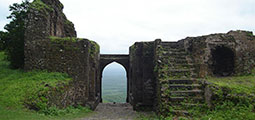
Palamu on the Auranga river , 20 miles south-east of Daltonganj as the crow flies, from which the district takes its name is for historian and archaeologist the most interesting place in the district, for it was for many years the seat of the Chero chiefs and it contains the ruins of the two great forts built by them, the capture of which by Mughals and later by the British resulted in the collapse of the Chero resistance, the forts lie within the reserved forests

and in order to preserve them the jungle has to be cut back at intervals .they are a favourite haunt of tigers, whose pug marks may nearly always be seen in and around the fort.The walls which are in preservation are about 5 feet in thickness and those of the old fort bear marks of cannon balls and bullets in many places.

jharkhand

In the new fort the Nagpuri gate is of great beauty. It is said to have been imported of great expense by Medni Roy, the greatest of the Rajas of “Palamau”, after he had sacked the place of the Maharaja of Chhotanagpur ; but the side of the fort on which it was erected was declared to be unlucky, and the entrance was bricked up, the carving being left where it was. The gate has now been opened and some of the adjoining masonry has been demolished in order to preserve it. The following account is taken from the Report of the Archeological Survey, Bengal Circle in 1903-1904 : “ There are two forts at Palamau, inside the jungle, close to each other. They are distinguished by the name of Purana Kila and Naya Kila, although the both appear to be of about the same age.

The style of the walls and buildings so closely resembles that at Rohtashgarh and Shergarh that both forts may safely be put down at the same time, viz., the beginning of Mughal period. The old fort is of regular shape, about one mile in circumference. The ground upon which it stands rises in terraces, the higher part is divided from the lower one by a cross wall. The walls are in places of considerable thickness, about 8’ the path way on top between the battlements measuring 5’- 6”. In other places they are thinner. The four gates are strongly fortified with inner and outer courts and provided with watch towers. The outer battlements of the walls are loop-holed. Inside are the remains of for two-storied houses and mosque with three domes. The inner cross wall has one gate, in front of which is a deep well cut out of the rocks with a vaulted tunnel leading down to it. The walls are built of stones and concrete, like those at Rohtashgarh and Shergarh.

The houses are plastered over and remains of paintings and stucco ornamentation are seen here and there,. In all these respects, the buildings closely agree with those in the other hill forts, already referred to. I observed one statue of Buddha close to the eastern gate and another broken Hindu or Buddhist idol, but no temple was found by me.The new fort is built around the slopes of a conical hill. There are two lines of walls. Each making up a square. The inner line clusters around the peak of the hill ; the outer line is somewhat lower down. The walls are of the same kind as in the old fort.

Palamau is now often mistaken as Palamau District. It may be mentioned here that the East India Gazetteer by Walter Hamilton (1815) has the following description lf this district:--“A hilly and jungly district in the province of Jharkhand, situated between the 23rd and 25th degrees of north latitude. This is one of the least cultivated and most thinly inhabited territories in the Company’s dominions, a great proportion of the land consisting of hills covered with jungle. The soil in many parts is strongly impregnated with iron.

 
Visitors insurance
 
Travel Booking To India

Indian Insurance

Travel Insurance

Student Insurance

Parents Insurance
 
 
Weather in India

Non Resident Indian Community

Visitor Medical Insurance |  Indian Insurance |  About Us |  Contact Us |  Sitemap |  Disclaimer |


Copyright NRI Online Pvt Ltd All rights reserved worldwide