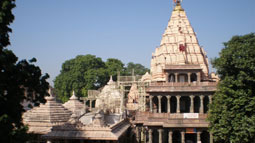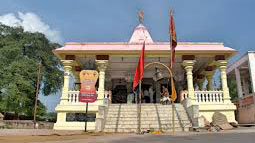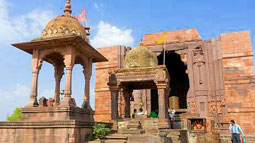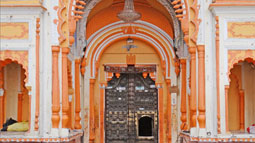

Madhya Pradesh, Madhya Pradesh Travel Tourism India, Travel to Madhya Pradesh State
| Area |
308,144 sq.kms |
| Population |
60,385,118 |
| Literacy |
64.11% |
| Language |
Hindi, Urdu, English |
| Capital |
Bhopal |
| Districts |
29 |
| Other Cities |
Indore, Jabalpur, Gwalior, Ujjain. |
| Airports |
Bhopal, Gwalior, Indore, Jabalpur, Khajuraho, Ujjain. |
| Weather |
Best time to visit is between October and March. Summer is hot (22°C to 48°C) winter mild (4°C to 23°C). Rains are heavily between June and September. |
Places to Visit : Temples and Monuments |
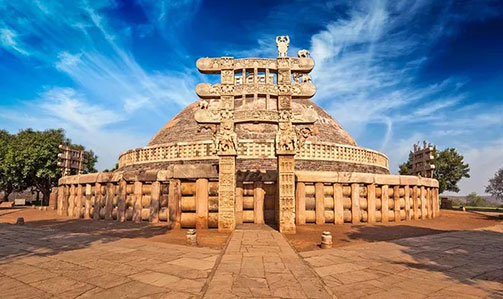
Asirgarh, Bagh, Bhandhavgarh, Bhopal, Chanderi, Chitrakoot, Gwalior, Indore, Khajuraho, Jabalpur, Mandu, Sanchi (Buddhist piligrim centre), Ujjain, Vidisha. |
| Wild Life |
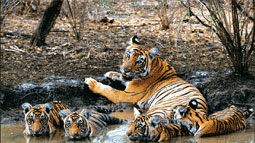
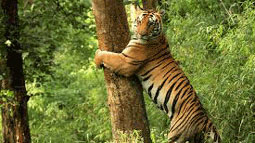
Bandhavgarh, Kanha, Rewa (white tiger). |
| Industrial Centres |
Bhilai, Bhopal, Indore. |
|
 |
Introduction to Madhya Pradesh
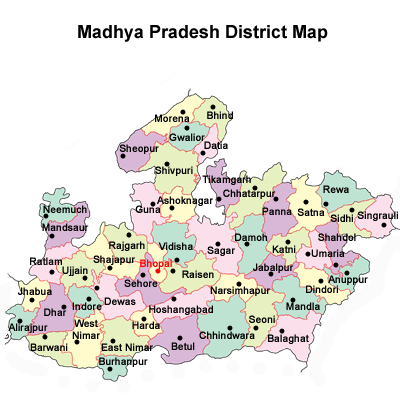
Madhya Pradesh is a state situated in the center of India which is often called as the heart of India. This state is surrounded by other states like Uttar Pradesh, Chhattisgarh, Maharashtra, Gujarat and Rajasthan. The state has two hill ranges Vindhya and Satpura that have traditionally served as boundary markers between north and south India. It also has a number of rivers, such as Narmada, Tapti, Chambal, Betwa, Ken, which make it agriculturally fertile.
|
 |
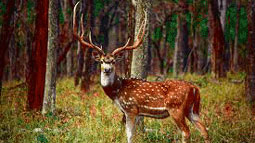
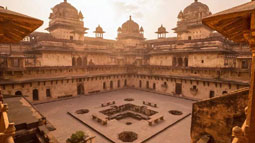
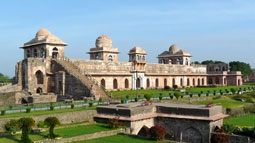
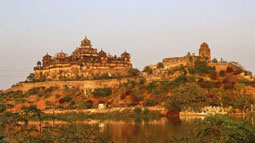
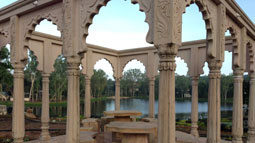
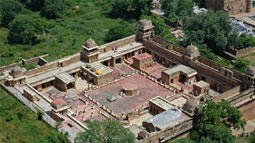
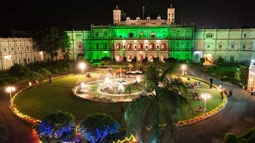
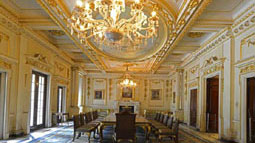
Madhya Pradesh is known for its religious hubs of Hinduism, Buddhism, Jainism and Islam, Khajuraho temples, impregnable forts, exquisitely carved Jain temples, palaces, which are the glorious reminders of erstwhile era of the royal Rajas and Maharajahs. Endowed with immense natural beauty and splendour, Madhya Pradesh is also famous for its wildlife sanctuaries and national parks, which are home to a rich variety of flora and fauna.
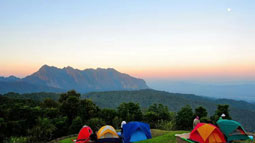
Along with its architectural and living heritage Madhya Pradesh is also known for its natural attractions like wild life sanctuaries, national park, hill stations and beautiful landscape. In the past few years, Madhya Pradesh tourism has shown a phenomenal growth and has succeeded in carving a special place for itself as the must visit tourist destination in India.
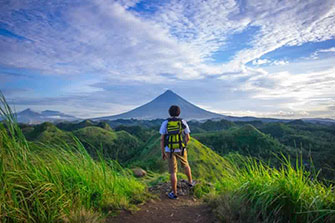
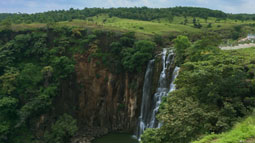
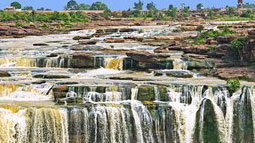
Be any less exotic than the famous temples? Madhya Pradesh is not called the "Heart of India" only because of its location in the centre of the country. It has been home to the cultural heritage of Hinduism, Buddhism, Jainism and Islam. Innumerable monuments, exquisitely carved temples, stupas, forts and palaces are dotted all over the State. The natural beauty of Madhya Pradesh is equally varied. Consisting largely of a plateau, the State has everything. Spectacular mountain ranges, meandering rivers and miles and miles of dense forests offering a unique and exciting panorama of wildlife in sylvan surroundings.
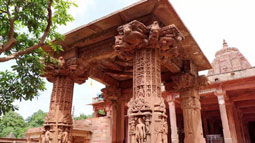
In the temple architecture of India, the Khajuraho complex remains unique. One thousand years ago, under the generous and artistic patronage of the Chandela Rajput kings of Central India, 85 temples, magnificent in form and richly carved, came up on one site, near the village of Khajuraho. The amazingly short span of 100 years, from 950 AD - 1050 AD, saw the completion of all the temples, in an inspired burst of creativity. Today, of the original 85, only 22 have survived the ravages of time; these remain as a collective paean to life, to joy and to creativity; to the ultimate fusion of man with his creator.
|

|
Why did the Chandelas choose Khajuraho or Khajirvahila - garden of dates, as it was known then - as the site for their stupendous creations?
Even in those days it was no more than a small village. It is possible given the eclectic patronage of the Chandelas and the wide variety of beliefs represented in the temples, that they had the concept of forming a seat of religion and learning at Khajuraho. It is possible that the Chandelas were also believers in the powers of Tantrism; the cult which believes that the gratification of earthly desires is a step closer to the attainment of the infinite. It is certain however, that the temples represent the expression of a highly matured civilization.
Yet another theory is that the erotica of Khajuraho, and indeed of other temples, had a specific purpose. In those days when boys lived in hermitages, following the Hindu law of being "brahmacharis" until they attained manhood, the only way they could prepare themselves for the worldly role of 'householder' was through the study of these sculptures and the earthly passions they depicted.
|
|
|
|
|
|
|
|