|
|
 |
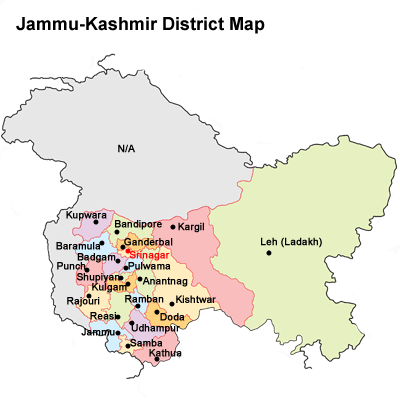
Introduction to Jammu and Kashmir
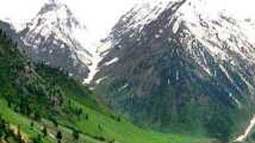
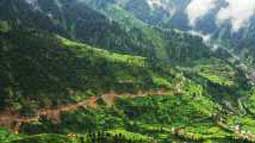
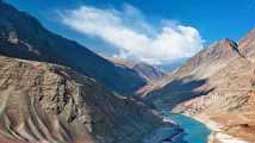
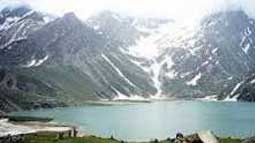
The land of snow clad mountains that shares a common boundary with Afghanistan, China and Pakistan, Jammu and Kashmir is the northernmost state of the Indian Union. Known for its extravagant natural beauty this land formed a major caravan route in the ancient times. Trade relations through these routes between China and Central Asia made it a land in-habited by various religious and cultural groups. Kashyapa is said to have laid the foundation of Kashmir, which was referred to as 'Kashyapamar'. Owing to the several climatic conditions during winter people here lead a nomadic life with their cattles. The slopes were inhabitable during the summer and the areas formed the areas of permanent settlements. It was also during the reign of Kashyapa that the various wandering groups led a settled life Buddhism influenced Kashmir during the rule of Ashoka and the present town of Srinagar was founded by him. This place was earlier called 'Srinagari' or Purandhisthan. The Brahmins who inhabited these areas admired and adorned Buddhism too. From the regions of Kashmir Buddhism spread of Ladakh, Tiber, Central Asia and China. Various traditions co-existed till the advent of the Muslims. The Mughal had a deep influence on this land and introduced various reforms in the revenue industry and other areas that added to the progress of Kashmir. In 1820 Maharaj Gulab Singh got the Jagir of Jammu from Maharaj Ranjit Sigh. He is said to have laid the foundation of the Dogra dynasty. In 1846 Kashmir was sold to Maharaj Gulab Singh. Thus the two areas of Kashmir and Jammu were integrated into a single political unit. A few chieftains who formed part of the administration were of the Hunza, Kishtwar, Gilgit Ladakh. During the Dogra dynasty trade improved, along with the preservation and promotion of forestry. Art and crafts also developed through encouragement. After, independence of India in 1947 this region formed a part of the Indian territory and is an integral region that contributed its part to preserve the unity and integrity of India.
|
Jammu province is inhabited by diverse castes and sects. The Dogras inhabiting the hilly tract bounding the mountains of the Kashmir valley on the south and extending to the plains of the Punjab, are descended from Aryan stock. They speak the Dogri language - a mixture of Sanskrit, Punjabi and Persian - whose origin goes back to the Indo-Aryan branch of Sanskrit. Their staple food consists of rice, wheat, and pulses. Their dress is simple, a short coat or a flowing shirt with pyjamas at the knees and tight-fitting at the ankles. The men's turban on the head is generally complemented by a kamarband at the waist. With a shawl or dupatta thrown over the head, women put on tight-fitting bodice or jumpers over pyjamas which resemble those of the men folk.
The Dogra Rajputs, who have traditionally made the Army their profession are not big build, their average height being 5'4" (160 cm). The men's complexion is light brown, the women's lighter still. |
Our Other Information about Jammu and Kashmir state are as follows :
- Culture of Jammu and kashmir.
|
|
|
|