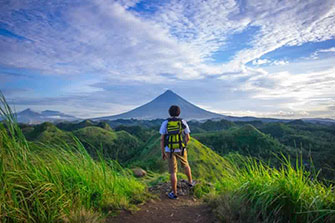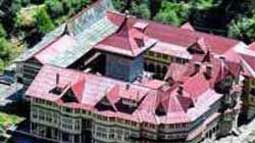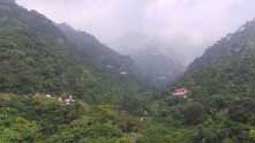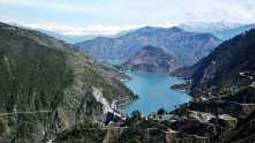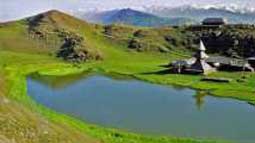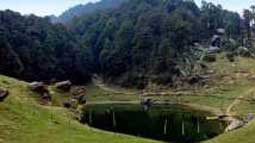
Himachal Pradesh, Travel to Himachal Pradesh, Himachal Pradesh Tourism

Area 55,673 sq.kms
Population 6,077,248
Literacy 77.13%
Language Pahari, Hindi, English
Capital Shimla
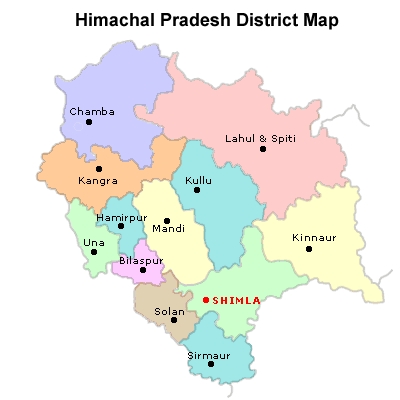
Districts 12
Other Cities Kulu, Kangra, Nurpur, Lahul-Spiti, Naggar.
Airports Shimla, Kulu, Dharmasala.
Weather Best time to visit Shimla is April to June. Summer is pleasant (14°C to 33°C). Winters are severe (0°C to 15°C) but tourist traffic is high for winter sports. For Kulu Manali, it is September to November.
Places to Visit :
Holiday Centres
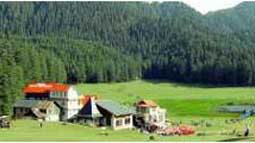
Shimla, Kulu, Monali, Chail, Dalhousie, Dharalsala, Kasauli, Mandi (river side), Parwanoo, Solan.
Temples and Piligrim Centres Chamba, Bilaspur, Baijnath, Bharmour, Dharmsala, Kangra, Trilokit, Nath, (Buddhist piligrim centre).
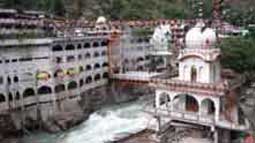
Mandi, Paonto Sahib (Sikh piligrim centre)
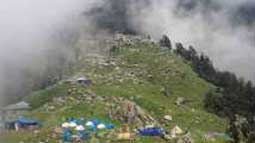
Siking And Other Sports Narkanda (Siking), Kurfi, Mashobra (hiking), Kulu, Chail (highest cricket field).
Hot Springs Manikaran, Bashishta, Tattapani.
Himachalpradesh


Introduction to Himachal Pradesh, Himachal Pradesh India

The Chini tahsil of Mahasu district was made an independent district from May 1, 1960 and came to be known as Kinnaur district. This is one of the smallest districts in India with an area of 6,520 Sq. meters and a population of less than 50,000 persons. The District Headquarters Kalpa at a distance of 260 kilometers from Simla, the capital of Himachal Pradesh is connected by a motorable road, has a population of less than 1500 persons. Any ordinary village in populated Uttar Pradesh or Bihar States has a higher population than the District Headquarters. There are various dialects besides Kinnauri.

The district has on the Eastern boundary Western Tibet, now a part of China. The Southern boundary adjoins Uttar Kashi districts of Uttar Pradesh and the Rohru tahsil of Mabasu district in Himachal Pradesh. The Western boundary has part of Mahasu and Kulu districts of Himachal Pradesh. The Northern boundary adjoins the Spiti Sub Division of Lahul and Spiti district of Himachal Pradesh.

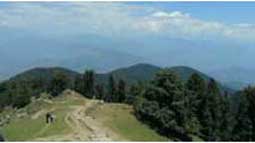
Himachal Pradesh is situated in the Western Himalayan belt of Northern India. The state of Himachal Pradesh has boundaries with the Jammu and Kashmir in the North, Uttar Pradesh in the Southeast, Haryana in the South and Punjab in the West. It is located between 30"22' and 30"12' north latitude and between 75"47' and 79"4' east longitude. The mountainous state has altitudes ranging from 350 to 7000 meters (1050 ft. to 21000 ft.) above the sea level. Himachal Pradesh came into being as a part C State of Indian Union on 15th April, 1948 by integrating 30 big and small hill states. All these areas at theat time constituted four districts namely: Chamba, Mahasu, Mandi and Sirmour with area of 27,169 square kilometers. In 1954, the neighboring State of Bilaspur was integrated with Himachal Pradesh there by adding one more district having 1167 S.K.

Himachal Pradesh remained part C State of the Indian Union till 1956. In 1956 States reorganization Commission recommended to abolish the categorization of States as Part A, B, C etc. With this addition at that time, HP constituted of ten districts, an area of 55,673 kilometres and population 28.12 lakh (1961 census).On 1st September, 1972 two more districts viz Hamirpur and Una were created by trifurcation of Kangra districts.Mahasu and Shimla districts were recoganised as Shimla an Solan districts on 1st September, 1972.Since, 1st September, 1972 onwards, there had been no change in the administrative structure of Himachal Pradesh. Presently, there are 12 districts, 52 Sub-divisions, 75 tehsils and 34 Sub-tehsils in Himachal Pradesh.

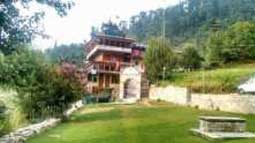
Agriculture is one one of the major occupation for people in Himachal Pradesh. The income of may people depend on the sheep, goats and other cattle. 90% of the Himachal Pradesh consists villages and small towns. Terraced fields and small two storey buildings with sloping roofs are quite common in villages. The basic necessities of life in villages are met by the people through few shops.

Since independence Himachal pradesh is on the path of development. Today the literacy rate of the state is 63% and is progressing every decade. 5 million is the stabilized population at the state and the credit goes to literacy and effective family planning programs. Now every village has electricity and drinking water.

Most of the populace that live in the border with China are Buddhists. Himachal has many beautiful Buddist temples and pagodas.

Our Other Information about Himachal Pradesh state are as follows :

External link

http://hptdc.nic.in/

Indian Tourism

Andaman Nicobar Tourism Andhra Pradesh tourism Arunachal Pradesh Tourism
Assam Tourism Bihar Tourism Chandigarh Tourism
Chattisgarh Tourism Dadranagarhaveli Tourism Daman & Diu Tourism
Goa Tourism Gujarat Tourism Haryana Tourism
Himachal Pradesh Tourism Jammu Kashmir Tourism Jharkhand Tourism
Karnataka Tourism Kerala Tourism Lakshadweep Tourism
Madhya Pradesh Tourism Maharashtra Tourism Manipur Tourism
Meghalaya Tourism Mizoram Tourism Nagaland Tourism
Orissa Tourism Pondicherry Tourism Punjab Tourism
Rajasthan Tourism Sikkim Tourism Tamilnadu Tourism
Tripura Tourism Uttaranchal Tourism Uttar Pradesh Tourism
West Bengal Tourism    


Interesting Information
- Visitor Insurance
- Practical Immigration Info
- Student Medical Insurance


Indian Insurance
- Health Insurance India
- Travel Insurance India
- Student Insurance India
 
Indian Festivals
 
NRI Shop
- Visitor Insurance
- Indian Tour Packages
 
Interactive NRIOL
- NRI Survey
- Letters to Editor
 
Calories Counter
 
Health Tools
- Basal Metabolic Rate
- Body mass index
- Body Fat estimator
- Waist Hip Ratio calculator
- Healthcare tips
 
 
NRIOL Community


Home | News & Views | NRIOL Exclusives | Community | Resources | India Travel Insurance | Visitor Medical Insurance | Shop | Help | Feedback
Estd. 1997 © Copyright NRI Online Pvt. Ltd. All rights reserved worldwide. Please read our site policy.