
Introduction To Daman and Diu -
An erliest while Portuguese colony, the union territory of Daman & Diu offers excellent beaches, timeless monuments and colorful, festive and simple people. The Arabian Sea surrounds the island of Diu on three sides with the capital Daman about 785 km away. Diu is a quiet secluded island measuring of Gujarat by a causeway. The total length of the coastline is just about 20 km. The beaches are quiet, and the climate is pleasant throughout the year.
Daman is a picturesque port town and is a popular getaway for most city dwellers. It has excellent beaches for beachcombers, swimmers and attractive options for sight different religions like Hindus, Christians, and Parsis. And, you get delicious sea food-pomfrets, prawns, dadha, Bombay duck, crab, and much more.
|
 |
|
Places of Interest
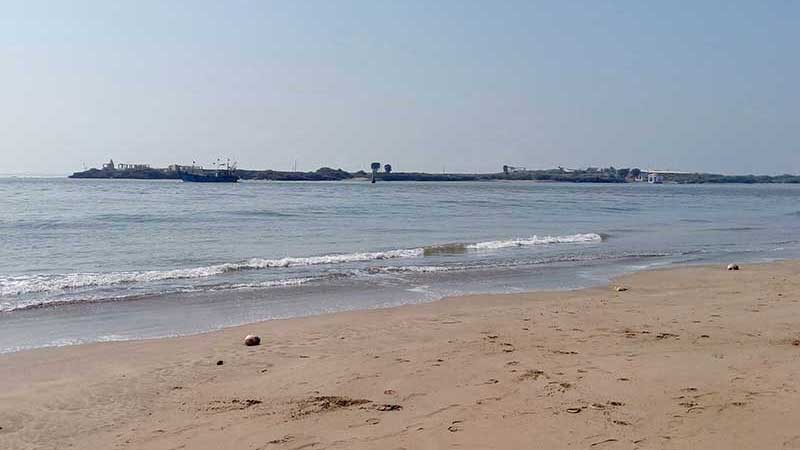
Nagoa beach is about a 20-minute drive out of Diu through open arid land to dense coconut groves. The beach is about 2 km long and is exceptionally beautiful and quiet.
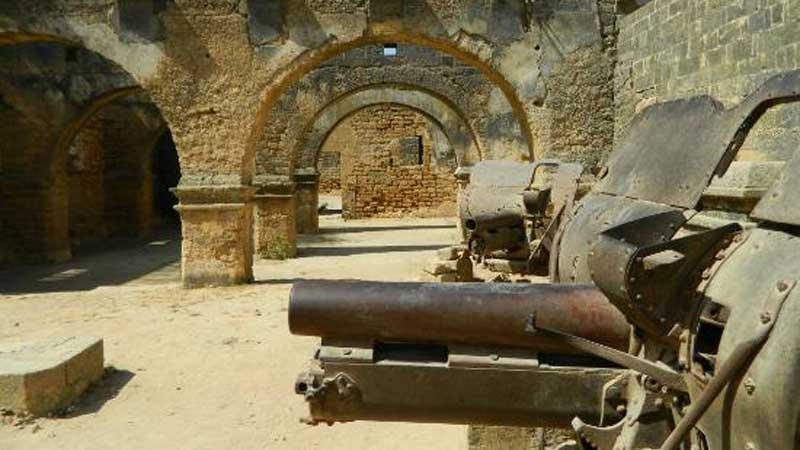
Diu fort is an expensive and imposing structure commanding a magnificent view of the sea. It was built as a result of a defense alliance between the sultan of Gujarat and the Portuguese against the Mughal between the years 1535 and 1541. The fort has the sea on three sides and a canal on the fourth. It has a lighthouse and a jail within its ramparts.
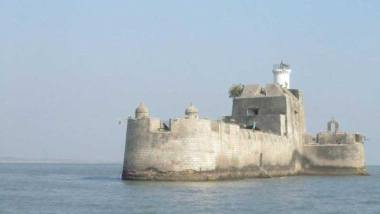
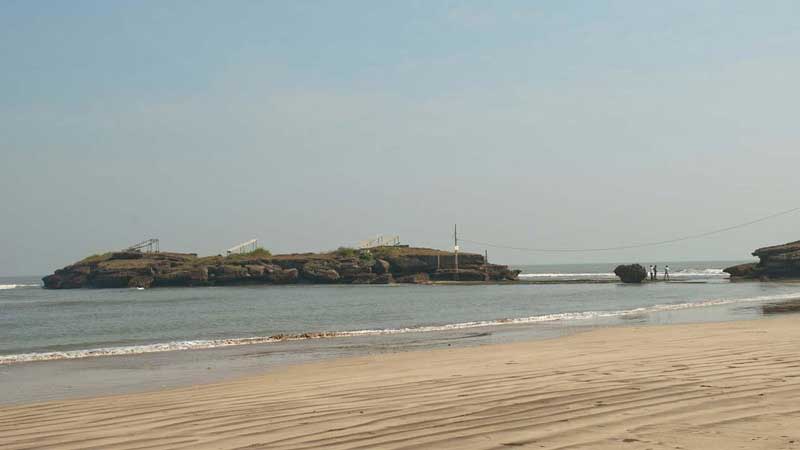
Fortress of Panikot is a magnificent stones structure in the sea, at the mouth of a creek. Approximately one mile from Diu jetty, this fort also has a lighthouse and a small chapel dedicated to our lady of the sea.
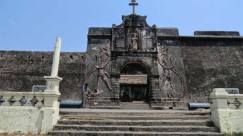
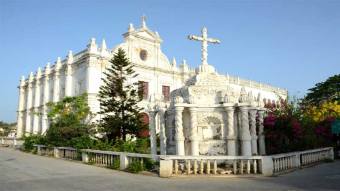
St. Paul's church is dedicated to our lady of Immaculate Conception, and was constructed in the years 1601-1610. The facade is perhaps the most elaborate of all Portuguese churches in India and glows when, in the evenings, floodlights illuminate it.
Jallandhar shrine is located on a hillock close to the beach, and contains a stone carving of the face of Jallandhar.
Gangeshwar temple is Fudam village is about 3 km away from Diu. Here, a Shivalinga called Gangeshwar is in the midst of rocks and is washed by the tidal waves of the sea
|
| |
|