NRIOL  -  Non-Resident Indians Online! Visitor Medical Insurance
Home Indian Tourism-Details Regions of India Miscellaneous Types of Tours About Us
Indian Tourism             

Temples in Eastern India          

Jagannath Temple
Kalighat Temple
Budhadeva Temple
Parsuramakund
Kamakhya Temple
Deoghar Temple
Sikkim Temple
Chaturdasha Temple
Manipur Temple
Meghalaya Temple
Mizoram an Introduction
Nagaland an Introduction

Parks in Eastern India              

Nandankanan National Park
Sundarban Park
valmiki Park
Gumti Park
Kaziranga Park
Palamu Park
Kanchendzonga Park
Kamlang Park

Wildlife Sanctuary in East              

Assam Wildlife Sanctuary
Tripura Wildlife Sanctuary
Westbengal Wildlife Sanctuary

Orissa Wildlife Sanctuary
Wildlife Sanctuary Mizoram
Wildlife Sanctuary Nagaland
Culture in East
Culture of Orissa
Culture of West Bengal
Culture of Bihar
Culture of Arunachal
Culture of Assam
Culture of Jharkhand
Culture of Sikkim
Culture of Tripura
Culture of Manipur
Culture of Meghalaya
Culture of Mizoram
Culture of Nagaland

Assam


Introduction to Assam

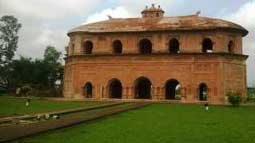
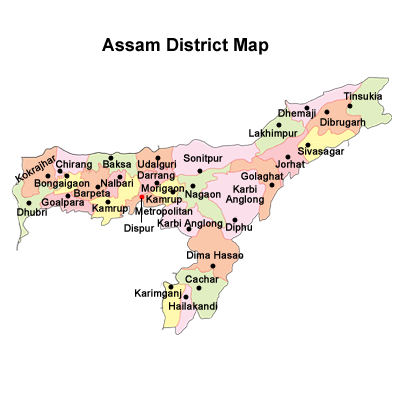
Assam is the gateway to the north-east, a state known for its breath taking scenic beauty, rarest flora and fauna, lofty green hills, vast rolling plain, mighty waterways and a land of fairs and festivals. Known in the ancient lore as the kingdom of Pragjyotisha and Kamrupa, the capital having been Pragjyotishpura situated in or near Guwahati. It originally included in addition to modern Assam, parts of modern Bengal and modern Bangladesh. The name Assam is of recent origin. It came into use after the conquest of Assam by the Ahoms. It is also known that “Assam” is derived from the word “Asama” meaning uneven. Assam is almost separated from central India by Bangladesh. Nagaland, Manipur and Myanmar bound it in the east, west by West Bengal, north by Bhutan and Arunachal Pradesh and south by Meghalaya, Bangladesh, Tripura and Mizoram. It is dominated by the mighty Brahmaputra, one of the great rivers of the world (length: 2900 kms), which not only has a fertile alluvial plain for growing rice, but also is famous for tea. Earthquakes are common. 

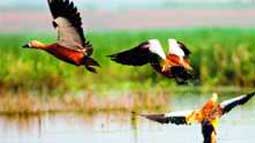
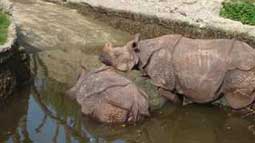
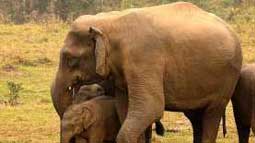
The Ahoms, a Buddhist Tai tribe, under Sukapha arrived in 1228 A.D., deposed the ruler and established the kingdom of “Assam” with its capital in Sibsagar. The advent of the Ahoms changed the course of Assam’s history. They later intermixed with immigrant Bengalis and most converted to Hinduism.  The Mughals attempted to invade without success, but the Burmese finally invaded Assam at the end of the 18th century and held it continuously until it was ceded to the East India Company at the close of the First Burmese War in 1826. The British administered it in name until 1947. Geographically Assam is a shadow of its former self. It has been reduced to one-third of its original size in 30 years. On the partition of India lamost the whole of Sylhet was merged with East Bengal(present Bangladesh). Dewanagiri in North Kamrup was ceded to Bhutan in 1951. In 1948, the N.E.F.A. was separated from Assam. In 1963 Nagaland was carved out of Assam as a full fledged state. On 21st January, 1972 Meghalaya was cut out of Assam as a separate state and Mizoram became a Union Territory. In 1987, Mizoram was granted statehood. Nature has ungrudgingly blessed Assam with an abundance of scenic grandeur, a wealth of rare and near-extinct wildlife.

Our Other Information about Assam state are as follows :

Visitors insurance
 
Travel Booking To India

Indian Insurance

Travel Insurance

Student Insurance

Parents Insurance
 
 
Weather in India

Non Resident Indian Community

Visitor Medical Insurance |  Indian Insurance |  About Us |  Contact Us |  Sitemap |  Disclaimer |


Copyright NRI Online Pvt Ltd All rights reserved worldwide