New Delhi
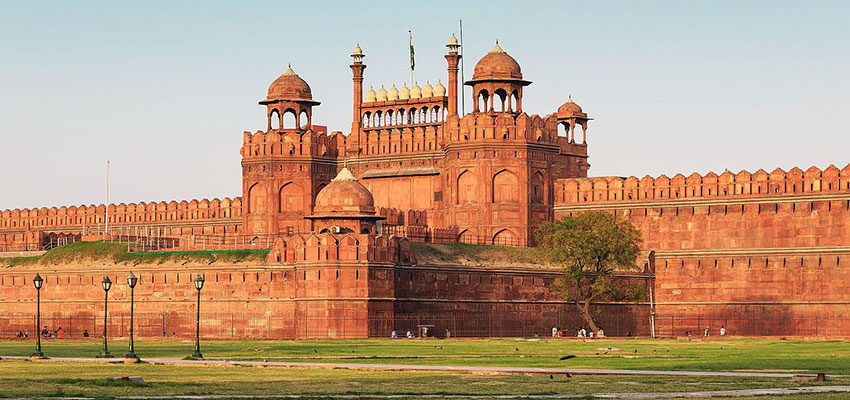
The city of New Delhi has a majestic and imperial past, which is evident of the rise and fall of many empires before the dawn of history. The history of New Delhi talks of the royal citadels of Indraprastha, Lal Kot, Quila Rai Pithora, Siri, Jahanpanah, Tughlakabad, Ferozabad, Dinpanah, and Shahjahanabad, which were altogether called Delhi.
New Delhi Hub takes you on a tour to Delhi where you can visit the ancient monuments which bring alive the history of the past. The eternal Jamuna River bears witness to the 5,000-year-old history of New Delhi. The city of Delhi has always been inherently recognized with power and imperial influence. The historic structure of the Old Fort or Purana Qila has stood witness to the restoration of the city of New Delhi, the periods of anarchy, and the rise & fall of empires, which bring alive history of New Delhi. After Shah Jahan built Red Fort the attention of administration shifted to gorgeous palaces of the fort. The magnificent monuments in New Delhi like the Old Fort still remind us of the splendors and lavish life style of the bygone era. The history of Delhi has seen the death of many empires and resisted bloody attempts to eliminate her. Nadir Shah who had ordered his soldiers to plunder and massacre Delhi.
Mumbai
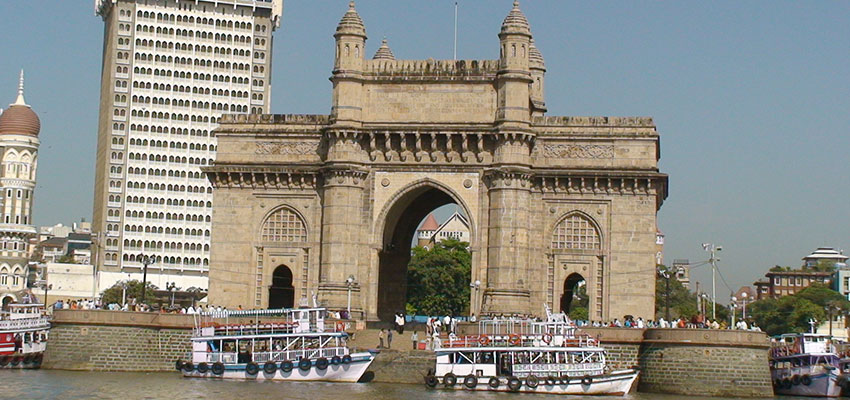
Although the archipelago which developed into the modern city of Mumbai was inhabited whenever history chanced on it, we are forced to imagine the lives of these early Mumbaikars, because the islands lay outside of the sweep of history and beyond the marches of armies for millennia. Stone age implements have been found at several sites in these islands. Later, around the third century BC, the coastal regions, and presumably the islands, were part of the Magadhan empire ruled by the emperor Ashok. The empire ebbed, leaving behind some Buddhist monks and the deep-sea fishermen called Kolis, whose stone goddess, Mumbadevi, gave her name to the modern metropolis.
Bombay changed hands many times. The islands belonged to the Silhara dynasty till the middle of the 13th century. The oldest structures in the archipelago--- the caves at Elephanta, and part of the Walkeshwar temple complex probably date from this time. Modern sources identify a 13th century Raja Bhimdev who had his capital in Mahikawati-- present-day Mahim, and Prabhadevi. Presumably the first merchants and agriculturists settled in Mumbai at this time. In 1343 the island of Salsette, and eventually the whole archipelago, passed to the Sultan of Gujarat. The mosque in Mahim dates from this period.
Hyderabad
A charming blend of the ancient and the modern, Hyderabad, also known as the 'Istanbul of India,' is a vital centre of Islamic culture, and central India's answer to the Mughal grandeur of the northern cities of Delhi, Agra and Fatehpur Sikri. It is also called as the 'City of Nawabs' and offers a combination of tradition and trend. Consisting of the twin cities of Hyderabad and Secunderabad, it is the capital of the state of Andhra Pradesh. It boasts of some fine examples of Qutab Shahi architecture, after all it was founded by Mohammed Quli, the Sultan of the Qutb Shahi Dynasty.
Chennai
Chennaipattinam was a popular trading center for spices and clothes for more than 2000 years. Portuguese and Dutch arrived here in the 16th century followed by the British and French. In 1639, the British East India Company established a settlement in the fishing village of Madraspattnam which they leased from the local Nayaks.
A modern capital, with the appearance of a gracious garden city, Chennai was once a group of villages set amidst palmfringed paddy fields, until two English East India Company merchants, Francis Day and Andrew Cogan, established a factory - cum - trading post here. Completed on St George's Day, 23 April 1640, this fortified settlement came to be known as Fort St George. Outside its walls was George Town, the so-called "native town', whose crowded lanes, each devoted to a particular trade, serviced the British colonists. Colonial rule linked the various villages, including the settlement founded in the 16th century by the Portuguese at San Thome, the sacred site associated with St Thomas the Apostle. Several centuries before the Europeans arrived, the great 7th-century Pallava port was at Mylapore; its Kapalesvara Temple, along with the Parthasarathi Temple at Triplicane, bear testimony to the city's antiquity. Colonial rule marked the beginning of the city's growth as a major commercial centre. Today, most of the large business houses have their offices in George Town, while Fort St George is the power centre of the Tamil Nadu state government. Extending across 172 sq km (66 sq miles), Chennai today is a dynamic mix of the old and the new, its stately colonical structures juxtaposed with modern high-rises. Its rich cultural heritage of Tamil literature, music and dance is perpetuated in universities and performing arts centres. It is also a highly political city, as can be seen from the many gradiose memorials to politicians that line Marina Beach.
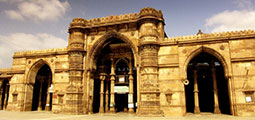
Ahmedabad
When Sultan Ahmed Shah was camping on the banks of the river, he was surprised to see some rabbits which were being chased by his hounds, turned around in defence and confronting their attackers. Sultan's spiritual advisor explained that it was the character of the land that it inspired courage to timid rabbits and advised the Sultan that the site would be auspicious for his new capital. And this is how the city became the capital of Sultan's regim. City was also named Ahmedabad after the name of Sultan Ahmed Shah.
King Karandev 1, the Solanki Ruler, had waged a war against the Bhil king of Ashapall or Ashaval. After his victory Karandev established the city called "Karnavati". This Hindu kingdom of Karnavati retained its importance till early 15th century when Gujarat fell to the Muslim Sultanate.
Kolkata
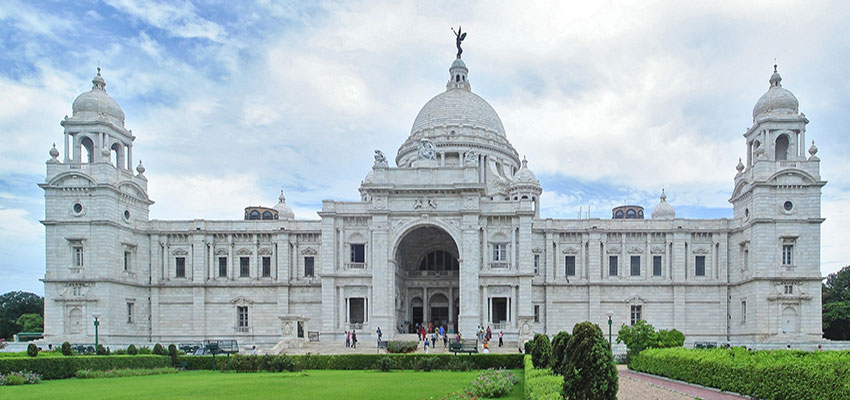
When the British grew tired of the charms of the trading town of Hooghly in 1686, they moved downstream to three villages - Kolikata, Sutanuti and Gobindapur. Led by Job Charnock, an English merchant, the established a factory at Sutanuti on August 24, 1690, the date accepted as the foundation day of modern Calcutta. The British then went on to build a single post out of the three villages. Ten years later, a fort was built near what is today known as BBD Bag and the consolidated city of Calcutta was set up.
In 1707, Calcutta became a separate presidency under the control of the directors of The East India Company. In 1717, Mughal emperor Aurangazeb's grandson Farrukh Siyar gave the Company duty-free trading rights in Bengal for a yearly payment of Rs 3,000. Calcutta became an important port and trading centre.
In the late 18th century, Calcutta turned into a prime trading centre and opened up to better infrastructure and advanced education. Calcutta became the centre of what would develop into the Bengal Renaissance, spawning many of India's reform movements. With resentment towards the East India Company growing, it was only a matter of time before the first strains of rebellion broke out. In 1857, Mangal Pandey, a sepoy with the Indian troops, shot his senior officer at Barrackpore near Calcutta, in an event that was to soon develop into the Sepoy Mutiny. The revolt spread through the country, but was quelled by the British who then assumed complete control of India and declared Calcutta the Imperial Capital.
A strong national awakening now took shape in Calcutta. On October 16, 1905, Lord Curzon, the then Governor General of Bengal, partitioned Bengal. This move was intended to stamp out growing nationalist sentiment, but it had the opposite effect. Calcutta became the hub of the Indian independence movement. The Partition was revoked in 1911, and the capital of India shifted to New Delhi.
However, with the Partition of the country in 1947, Calcutta became home to thousands of refugees fleeing their former homes in East Pakistan. More refugees poured into the city with the Bangladesh independence movement in 1971. Kolkata was now a city almost bursting at its seams.
In 2001, Calcutta was officially renamed Kolkata.
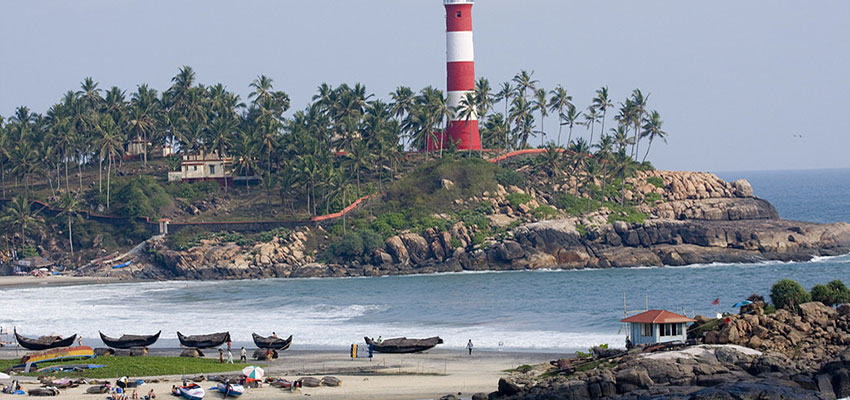
Thiruvananthapuram
Thiruvananthapuram, earlier known as Trivandrum, is the capital city of Kerala. The name literally splits into "Tiru","Anantha""puram" meaning "the town of Lord ANANTHA". This is really true since the temple is at the heart of the town and for generations, the kings have called themselves "Padmanabha-Dasa" or the "servants of LORD Ananthapadmanabha", and ruled the state as the representatives of LORD Anantha-Padmanabha.
The town has a history of supporting fine art and culture. The Kings of Tiruvancore (Thirunals as they are known) have not only promoted art but have themselves been accomplished artists. The most famous of them are Swathi Tirunal who is a well known composer in both Karnatak and Hindustani systems of music, and Raja Ravi Varma the internationally acclaimed painter, well known for inventing paints using natural materials.
The town bustles with activity during Navaratri, when music festivals are held in the Sri Padmanabha Swamy Temple. Unique in its style, the temple combines the Chola and Chera styles and is large enough to conduct processions within the temple. There is a separate quandrangle for dancers, where even the pillars are tuned and reverberate to different notes! Anantha-Padmanabha in reclined posture is a large statue, which needs to be viewed from three separate doors.
Museum is an important and unique building which houses several artifacts and rare musical instruments used in yesteryears. Within the museum complex is the Chitra Art gallary which houses Raja Ravi Varma's most famous paintings. It also brings to light the unique history of Travancore state, where education was given prominence. Another full length painting captures the mood of temple entry act of 1932 when untouchables were allowed into the Padmanabha temple. Their disbelief, reverence to the LORD are brought out well.
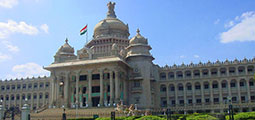
Bangalore
Several speculations have been made about how the name "Bangalore" came about. Based on information from the Gazetteer of India, Karnataka State, Bangalore District section, the name "Bangalore" is an anglicised version of "Bengalooru," a word in the local Kannada language that was given to a town. The story goes that this word was derived from the phrase "bende kaalu ooru," which translates into "the town of boiled beans." It is said that King Ballala of the Hoysala dynasty lost his way in the jungle while on a hunting expedition. Tired and hungry, he encountered a poor, old woman who offered him the only food she had - some boiled beans. Grateful to her, the king named the place "bende kaalu ooru." However, historical evidence shows that "Bengalooru" was recorded much before King Ballala's time in a 9th century temple inscription in the village of Begur. "Bengalooru" still exists today within the city limits in Kodigehalli area and is called "Halebengalooru" or "Old Bangalore."