Sport plays a prominent role in British life and many Britons make a great emotional investment in their favourite spectator sports. The most popular sport is football, which has an enormous lead over its rivals except in Wales, where rugby union is generally regarded as the national sport. Cricket is popular in England, but is less important in the other home nations. Rugby union and rugby league are the other major team sports. Major individual sports include athletics, Fencing, golf, motorsport, and horseracing. Tennis is the highest profile sport for the two weeks of the Wimbledon Championships, but otherwise struggles to hold its own in the country of its birth. Many other sports are also played and followed to a lesser degree.
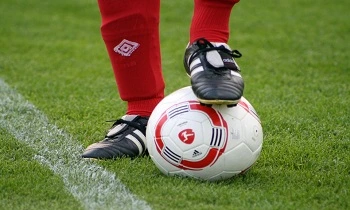
The United Kingdom has given birth to more major sports than any other country including: Football (soccer), tennis, squash, golf, boxing, rugby (rugby union and rugby league), cricket, snooker, billiards, badminton and curling. It has also played a key role in the development of sports such as boxing and Formula One.
Football
The modern global game of football evolved out of traditional British football games in the 19th century. Football (or soccer) is the highest profile sport in the United Kingdom by a very wide margin. This has been the case for generations, but the gap is widely perceived to have increased since the early 1990s, and football's dominance is often seen as a threat to other sports.
The governing bodies for football in the United Kingdom are The Football Association (of England) and its Scottish, Welsh and Northern Irish equivalents. These bodies run the national teams, the recreational game and the main cup competitions. They have however lost a significant amount of power to the professional leagues in recent times.
Club football is organised separately in each of the home nations. English football has a league system which incorporates thousands of clubs, and is topped by four fully professional divisions. The elite FA Premier League has twenty teams and is the richest football (soccer) league in the world. The other three fully professional divisions are the run by The Football League and include another seventy two clubs. Annual promotion and relegation operates between these four divisions and also between the lowest of them and lower level or "non-league" football. There are a small number of fully professional clubs outside the top four divisions, and many more semi-professional clubs. Thus England has over a hundred fully professional clubs in total, which is considerably more than any other country in Europe.
The two main cup competitions in England are the FA Cup, which is open to every men's football team in England, though only professional clubs ever reach the last few rounds, and the League Cup (currently known as the Carling Cup), which is for the ninety-two professional clubs in the four main professional divisions only.
Scotland has a similar but smaller club football structure. The main league is the single-division, twelve-club Scottish Premier League (SPL), which is dominated by the two Old Firm Glasgow clubs Rangers F.C. and Celtic F.C. who dwarf their rivals in support and financial resources. Below the SPL is the Scottish Football League, which has three divisions with a total of thirty clubs, not all of which are fully professional. The two main cup competitions are Scottish Cup and the Scottish League Cup.
The top level league in Wales is the League of Wales. This league has a relatively low profile as rugby union is the national sport of Wales and the top three Welsh football clubs play in the English league system. The main Welsh Cup competitions are the Welsh Cup and the FAW Premier Cup.
In Northern Ireland the main league is the Irish Football League, which despite its name is open only to teams from Northern Ireland, as opposed to the Republic of Ireland. It has three divisions.
Each season the most successful clubs from each of the home nations qualify for the two Europe wide club competitions organised by UEFA, the UEFA Champions League and the UEFA Cup. England and Scotland have both produced winners of each of these competitions.
The four home nations compete separately in international football. The first ever international football match was between Scotland and England in 1872. The only major national team competition won by a British side is the 1966 World Cup, which England hosted and won.
Cricket
Cricketer W.G. Grace was the most celebrated British sportsman of the 19th centuryCricket was invented in England and is regarded as England's national summer game. It is by no means equal to football in finance, attendance or coverage, but it has a high profile nonetheless. It is probably the second most widely covered sport, and the fortunes of the England team are closely followed by many people who never attend a live game.
There are eighteen professional county clubs, seventeen of them in England and one in Wales. Each summer the county clubs compete in the first class County Championship, which consists of two leagues of nine teams and in which matches are played over four days. The same teams also play the one day National League, a one day knock out competition called the C&G Trophy, and the short-form Twenty20 Cup. These clubs are heavily dependent on subsidies from the England and Wales Cricket Board, which makes its money from television and endorsement contracts and attendances at international matches.
Scotland, England (incorporating Wales) and Ireland (composed of players from both Northern Ireland and Eire) have representative sides at the top level of international cricket; England is one of the test-playing nations, whilst Scotland and Ireland are associate members of the ICC and compete at one-day international level. Each summer two foreign national teams visit England to play seven test matches and numerous one-day internationals. In the British winter the England team tours abroad. The highest profile rival of the England cricket team is the Australian team, with which it competes for The Ashes, one of the most famous trophies in British sport.
Rugby
Like football, rugby union and rugby league both developed from traditional British football games in the 19th century. Rugby union was codified in 1871. Rugby league was established in 1895 by a number of clubs which wished to be allowed to pay their players, and subsequently developed somewhat different rules. For much of the 20th century there was considerable antagonism between rugby league, which was a mainly working class game based in the industrial regions of northern England, and rugby union, which is a predominantly middle class game in England, and is also popular in the other home nations. This antagonism has abated since 1995 when the International Rugby Board opened rugby union to professional players.
Tennis
Tennis is yet another sport which originated in the United Kingdom, but it has not flourished there in recent decades, and its profile is highly dependent on the Wimbledon Championships. However, no British man has won Wimbledon since 1936 and no British woman since 1977. The governing body of the sport is the Lawn Tennis Association (LTA), which invests the vast profits from the tournament in the game in the hope of producing British champions, but a sting of revamps of the coaching system have failed to raise the standard of LTA-trained players. The only British players of either sex to reach the world top 50 in recent years are Greg Rusedski, who learnt his tennis in Canada, and Tim Henman and Andrew Murray, who did not pass through the LTA system either. Outside of Wimbledon fortnight tennis's profile in Britain is low and largely dependent on the three aforementioned players, two of whom are approaching retirement.
"Great Britain" or "British Isles" teams have won the Davis Cup nine times, but all of them were before World War II and there is no prospect of another victory in the foreseeable future
;